

Marketing Assistant
The key takeaways from this year’s gathering of digital leaders in purpose driven organisations.
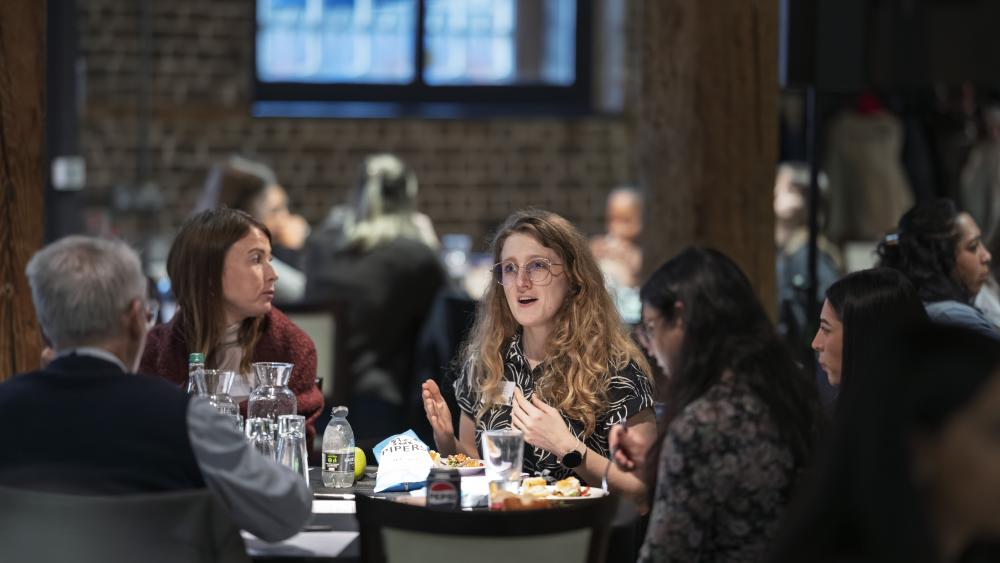
Our latest Great Digital for Good Conference, held on November 14th in London, brought together an exceptional group of purpose-driven digital professionals.
The day was packed with inspiring talks, practical workshops, and hands-on exercises designed to help delegates tackle the real challenges they face in their work. It wasn’t just about listening, it was about doing. Delegates worked alongside peers from other sectors, and left with tools they could immediately apply to their organisation.
At Numiko, we know that the most valuable insights often happen in conversation. This year, we focused on creating space for delegates to connect, share, and collaborate, building a sense of community that extends beyond the conference itself.
We’ve summarised each talk or workshop to give you a taste of the day. Recordings are available for most talks if you want to explore them in more detail.
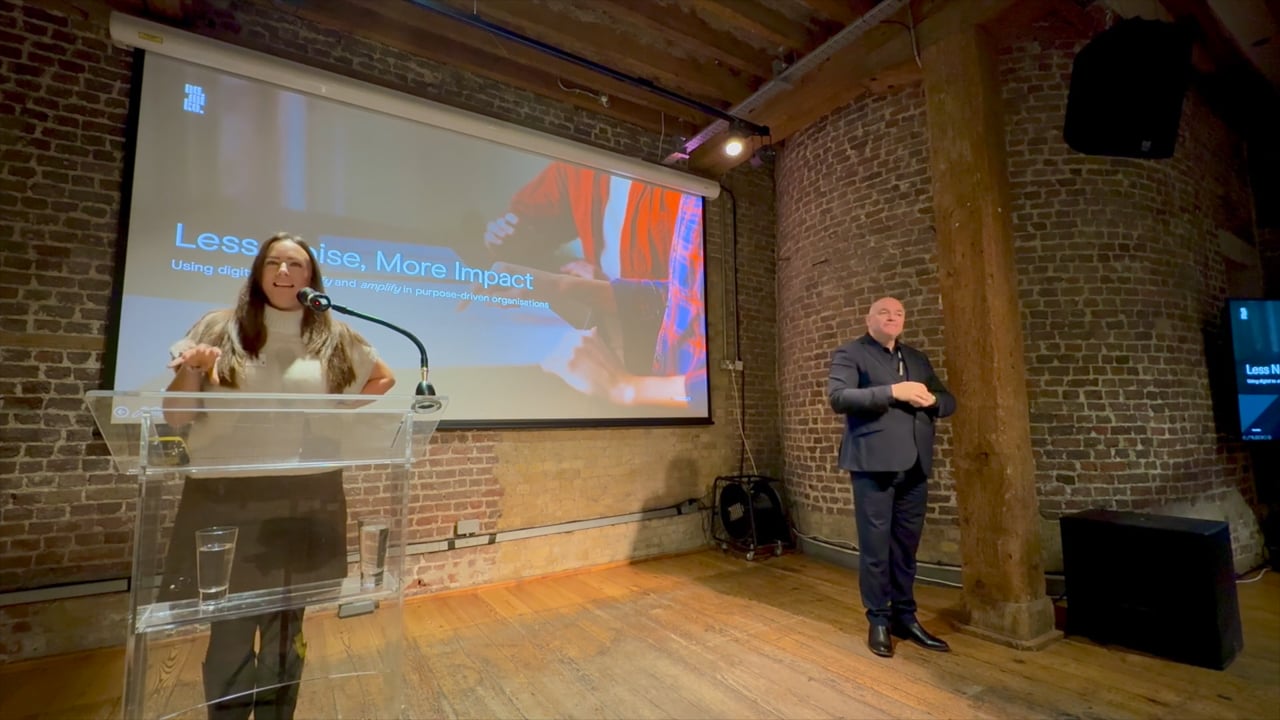
Less noise, more impact
Marie Kitney, our Director of Client Engagement, kicked off the day with a workshop on cutting through digital noise to help teams prioritise the work that makes the biggest impact. She shared practical ways to streamline everyday tasks, from AI-generated summaries and smart tagging to atomised content, and guided delegates through two exercises: one to identify opportunities to simplify digital tasks, and another to explore how digital could amplify their organisation’s mission. It set the tone for a day of thinking bigger, working smarter, and making digital count.
Design it once: How design systems save time and benefit users
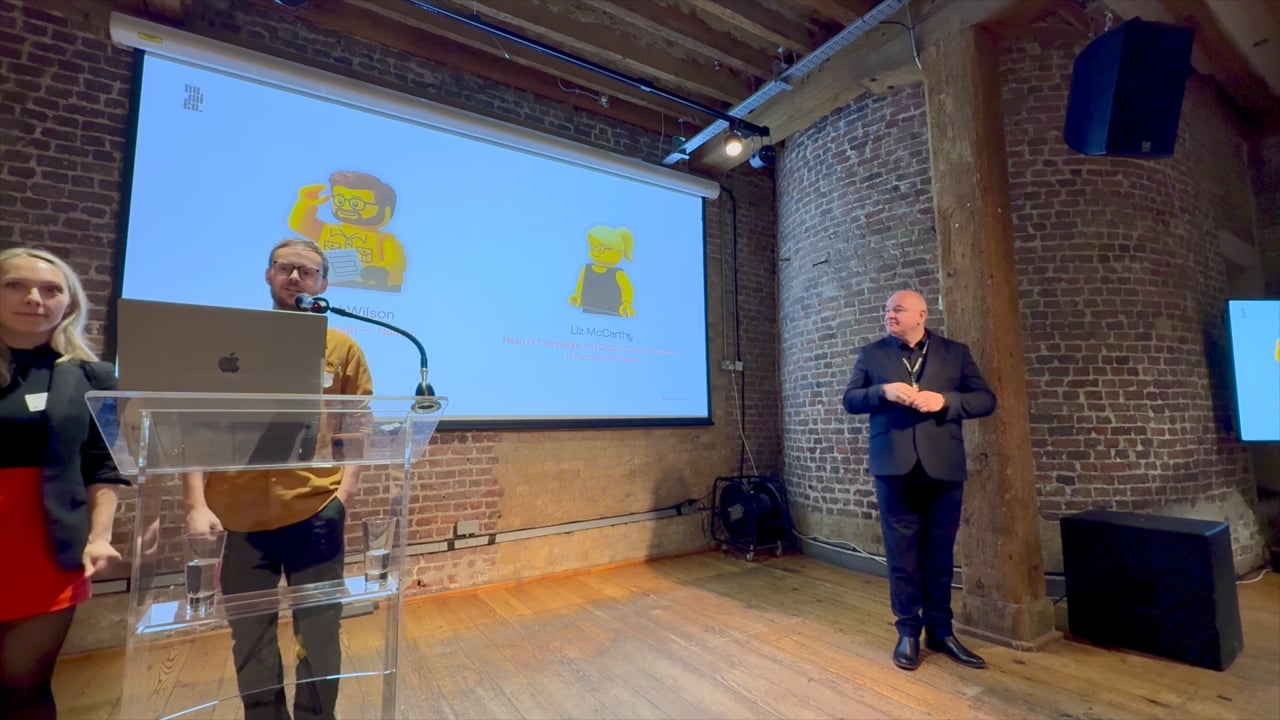
What happens when your team finally starts designing from the same playbook? Elizabeth McCarthy, Head of Campaigns and Digital Communications, University of Oxford, and Daniel Wilson, Head of Design, Numiko, unpacked why design systems are such a game-changer for digital teams. When everyone uses the same well-structured set of components, projects move faster, testing gets more reliable, and teams can spend their energy on real creativity rather than rebuilding the basics.
Daniel broke down how a design system works in practice – and how it naturally moves teams toward a more collaborative, efficient way of working. Liz followed with a look at our work with the University of Oxford, where we’re helping bring clarity and consistency to a complex digital landscape.
Their message was clear: design once, reuse everywhere, and watch your user experiences scale effortlessly.
From measurement to momentum
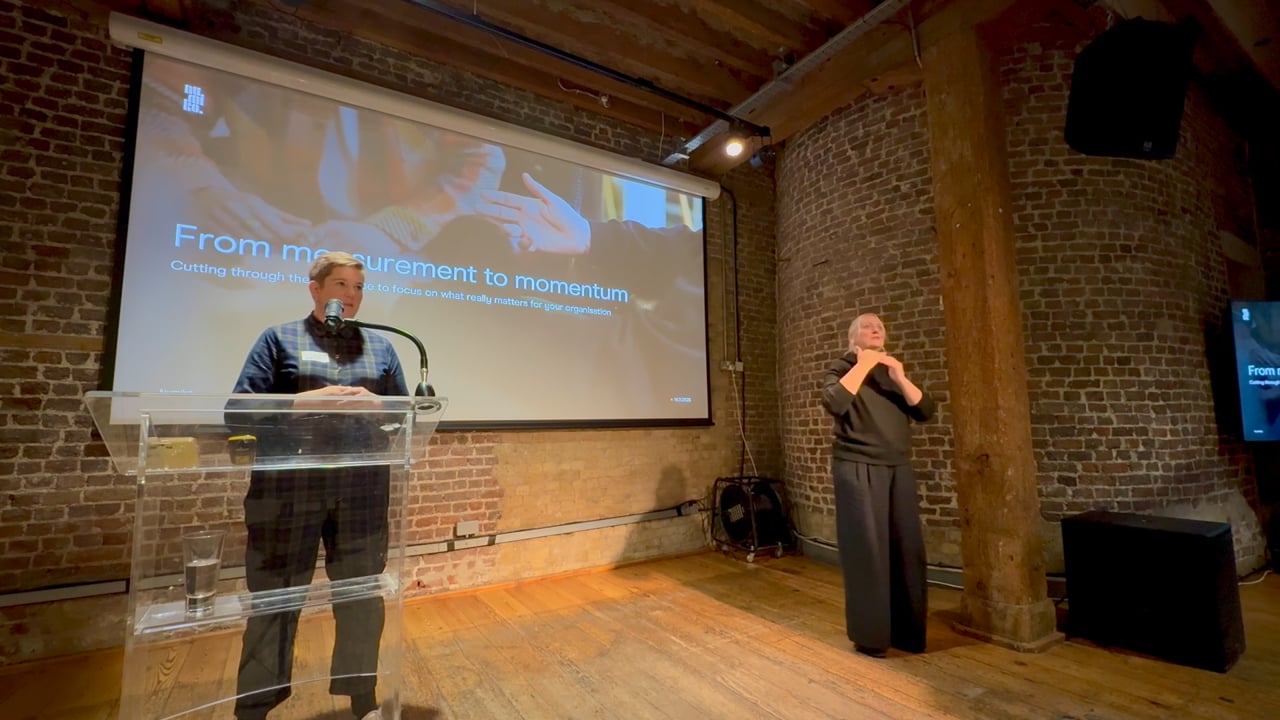
What if your website data could drive real change? Catherine Warwick, one of our Client Partners, showed us how. She explained how to define success based on purpose, set KPIs that link online engagement to real-world outcomes, and use dashboards to track what really matters to your organisation. Perhaps most important of all, she demonstrated how to turn those insights into action using benchmarks and targets to generate momentum and improve website performance.
Getting your colleagues to yes
Paul Costello, another of our Client Partners, showed us three simple, evidence-backed techniques for getting the kind of stakeholder buy-in that makes digital projects succeed. We’re all using them already, just not always intentionally.
He unpacked three human biases that shape how people make decisions: the IKEA Effect, the Framing Effect, and Social Proof. For each one, we explored how the bias could be used to bring stakeholders with us on a major website project, discussing, at our tables, practical ways to bring these to life. Key takeaway? Great digital starts with people, so lead them with intention.
Five digital tactics for cultural and social impact
Berry Cochrane from Forward Action showed how organisations can drive cultural and social impact in a digital landscape that isn’t neutral and often works against them. In an attention economy where focus is monetised and algorithms reward outrage, relevance isn’t guaranteed and truth has to work harder than ever in a world increasingly shaped by AI-driven misinformation.
Berry shared practical tactics to help organisations reclaim influence: break down silos, lead with values, prioritise humanity, empower your messengers, build communities rather than just reach, embrace video, and, above all, define a clear narrative. Her message was clear: If we don’t shape the digital space with intention, someone else will.
24 hours to solve your most critical challenges
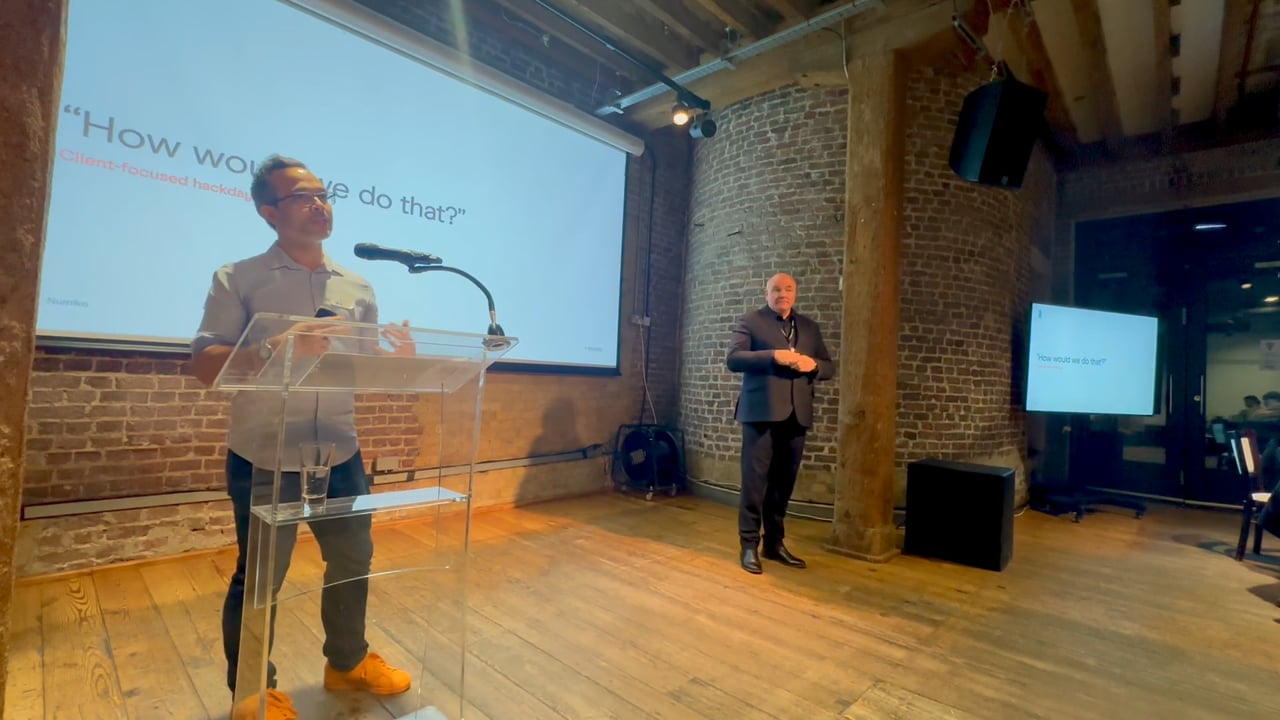
Hack days aren’t just events, they’re a fast-track way to tackle your toughest challenges. Jaron Ghani, our Innovation Director, showed how a single day of focused collaboration can deliver real results. Whether sector-, client-, or technology-focused, hack days give teams space to innovate, prototype, and test solutions. The session provided a behind-the-scenes look at Numiko’s hack days, showing how teams came together to turn client challenges into practical, actionable solutions. Key tips: state the problem clearly, challenge the brief, fail fast, and don’t aim to build the final solution in a day.
Unconference: Looking ahead to 2026
The unconference session is our chance to make things truly collaborative. A space to hear from everyone in the room, not just the people holding the mics.
This year we centred the discussion on two questions: what are the biggest opportunities for digital teams next year? And just as importantly: What are the biggest challenges?
On the challenge side, AI search trends dominated the conversation, along with managing stakeholder expectations, tackling accessibility and organisation-wide rebrands.
But there was plenty of optimism too. Delegates pointed to opportunities in AI-powered efficiency, simplification, digital upskilling, smarter dashboards, and geo-based improvements.
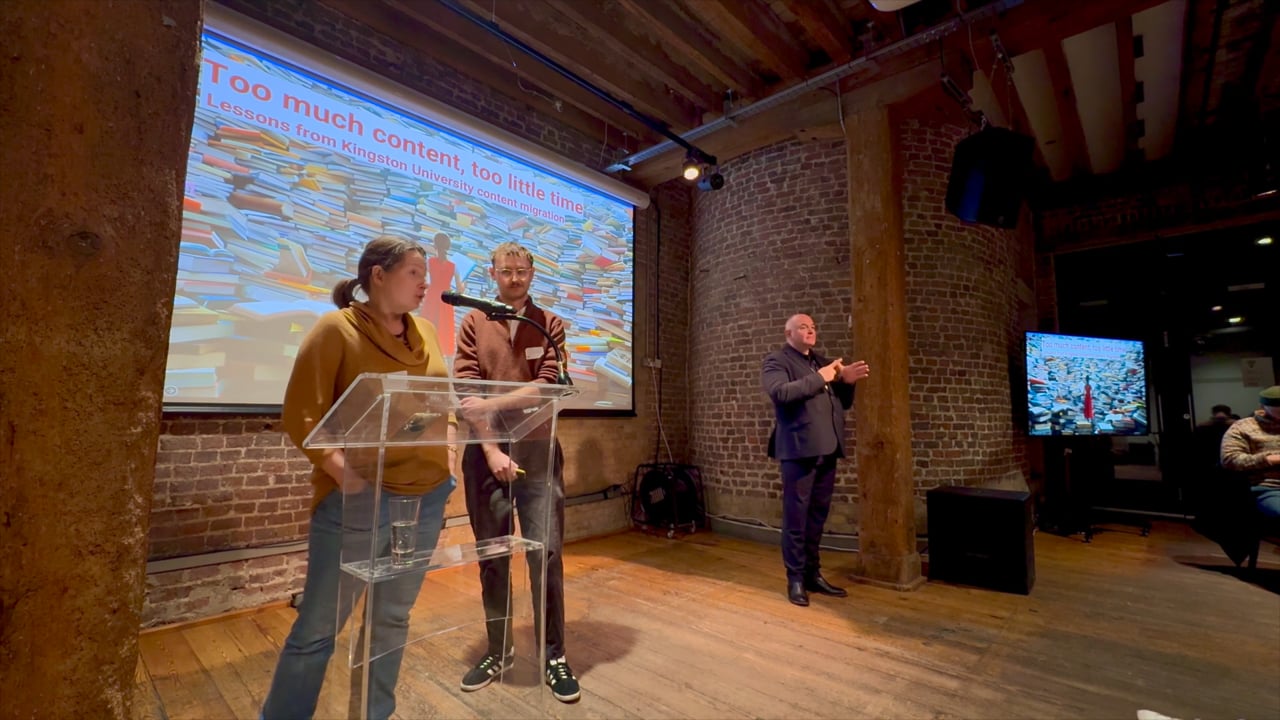
Kingston University: Too much content, too little time
Agnieszka Grychowska and Sean Callow from Kingston University shared their experience of tackling a large-scale content migration project, showing why auditing regularly is key to keeping major initiatives running smoothly.
LAMDA: Punching above your weight as a small digital team
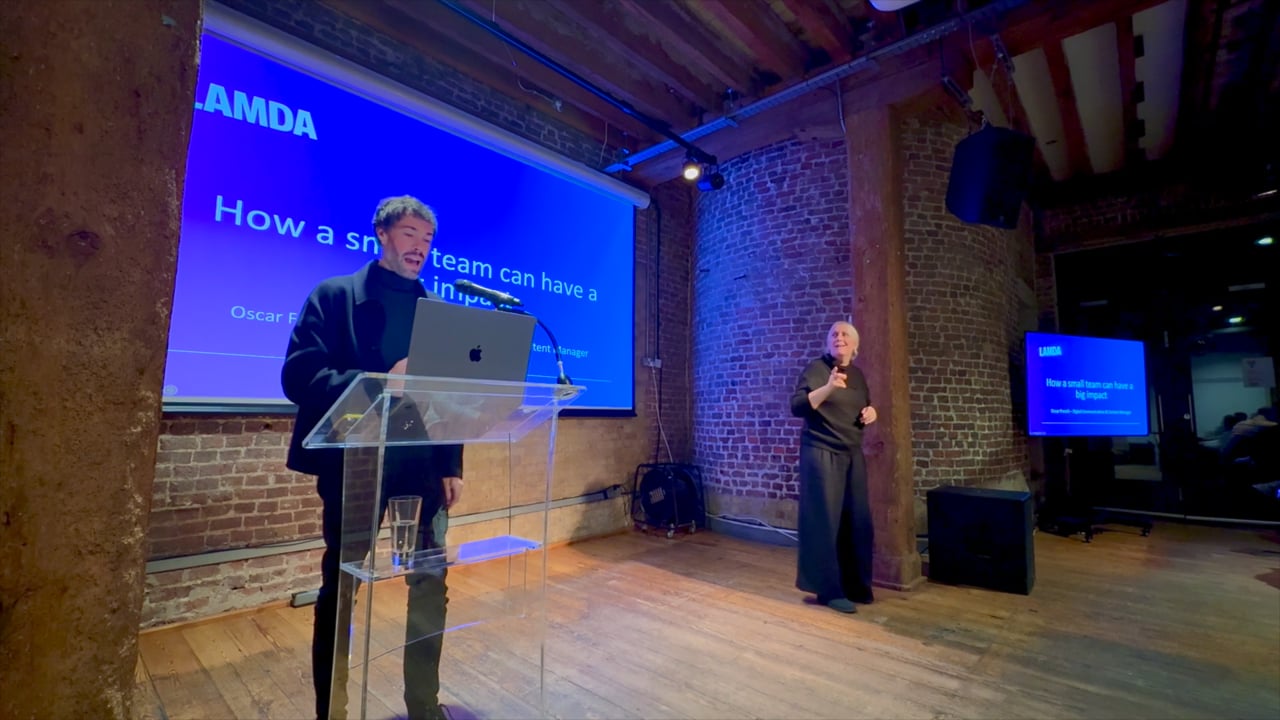
Oscar French from LAMDA explained how their small digital team manages to deliver a big impact. By working flexibly, making smart use of the LAMDA brand, especially celebrity alumni, and spending where it matters, the team achieves far more than its size suggests. He also emphasised that consistent, organic storytelling goes a long way in building visibility and trust.
Being a Bloomberg tech fellow: The Courtauld’s journey
Eva Bensasson, Bloomberg Tech Fellow and Website Manager at the Courtauld & Jane Macpherson, Bloomberg Accelerator Programme Digital Advisor for Arts Council England, reflected on The Courtauld’s journey in the Bloomberg Accelerator Programme. They showed how it has strengthened their digital skills, expanded their network and supported their work on improving user journeys, all while bringing the whole digital team along for the ride.
What really matters for policy change
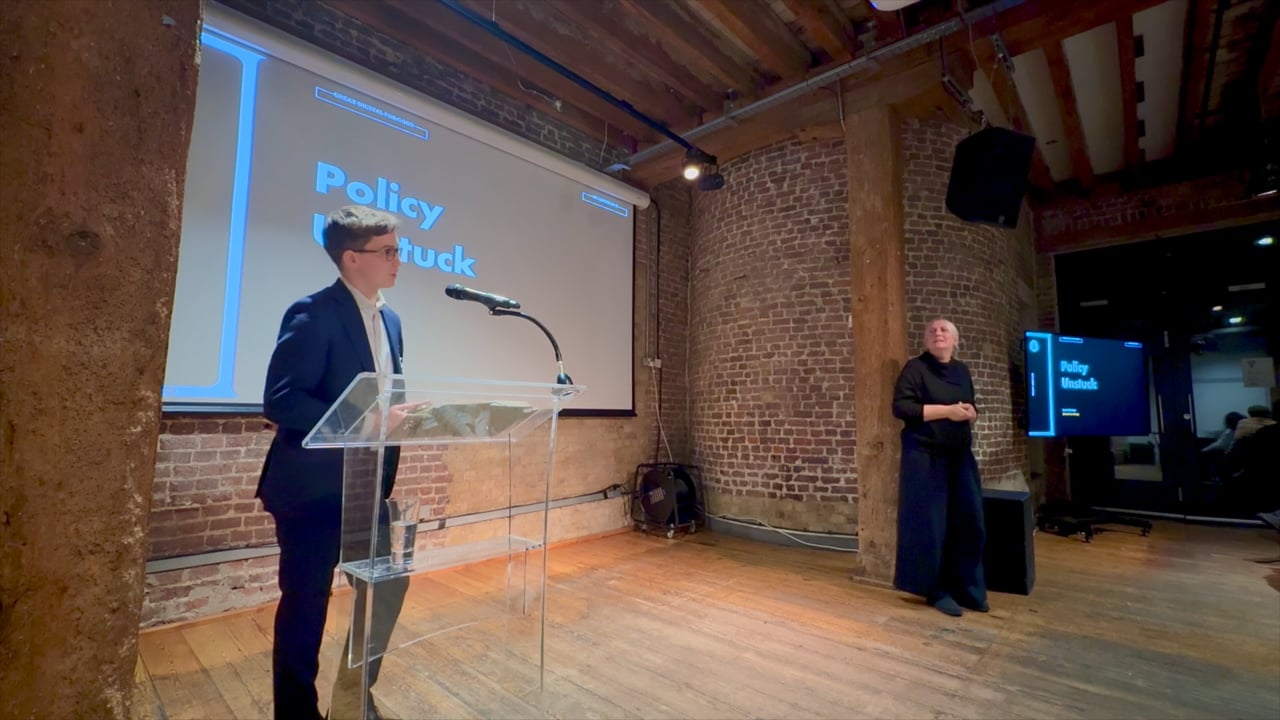
Jamie Horton, Senior Consultant at Cast From Clay, offered an inside look at policymaking, sharing insights from Cast From Clay’s ‘Policy Unstuck’ series. Evidence alone isn’t enough. Success comes from clear objectives, understanding the people and processes that drive change, and spotting the right opportunities to make your policy stick.
Digital Sustainability
Tejas Patel and Callum Hosie from Upsun shared practical approaches for helping digital teams save both their money, and the planet. They outlined three levers: optimise infrastructure, use geo-localisation, and rightsizing servers, alongside strategies to boost carbon efficiency and keep costs predictable. Smart, simple changes that make sustainability feel doable and impactful. The headline stat: 88% reductions in your website’s CO2 emissions are possible with just a few simple changes.
Summary
What stood out most across the day was the power of collaboration. Bringing together people from different sectors, roles and organisations always sparks something special and this year was no different. We really enjoyed ourselves, and if the great scores we received on our feedback forms are anything to go by, we can say with confidence our delegates did too!
We’re already excited to bring everyone back together next year so watch this space.