
Digital sovereignty, AI with guardrails and a more user-friendly CMS: what we learned at DrupalCon Rotterdam
Numiko developers Jacob Mirzaian and Aurora Norris spent four days at DrupalCon Rotterdam. We came back with a clear view of where Drupal is heading, a contribution to Drupal Core and a turn on a Drupal-powered pinball machine.
"Drupal is now light-years ahead of its reputation." That was the message from Drupal founder Dries Buytaert in his opening keynote at DrupalCon Rotterdam. As developers building and maintaining Drupal sites, staying abreast of every update - this is a sentiment we can’t help but agree with. Drupal is moving at breakneck speed and we spent four days at the conference exploring all the ways how.
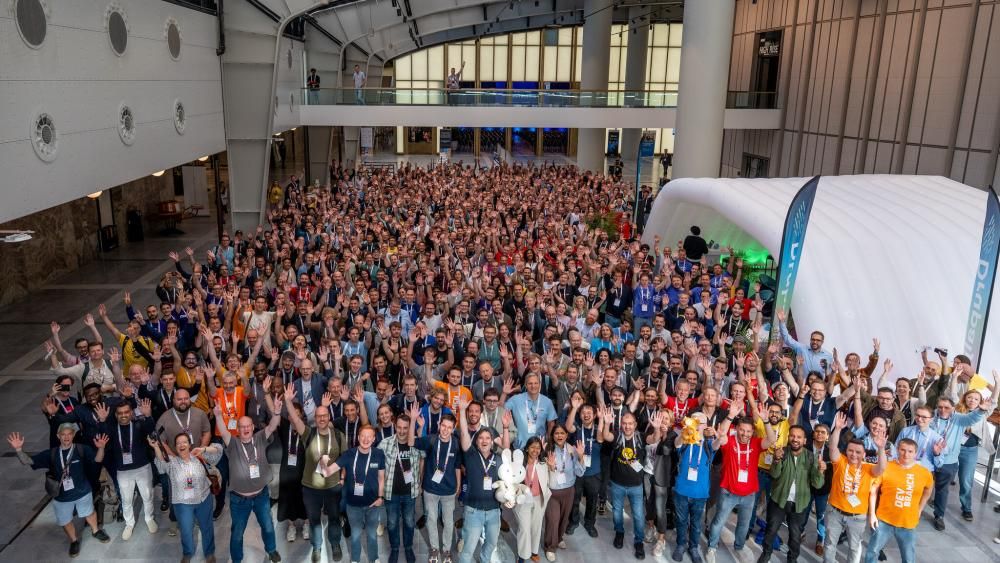
This year's DrupalCon Europe brought together the developers, agencies and organisations who build with the open source CMS. For us there were three key takeaways that will interest digital teams in the purpose-driven sector.
Digital sovereignty is moving up the agenda
European governments are pushing hard to reduce their reliance on big American tech, including as a matter of policy and open source sits at the centre of the EU's tech strategy. DrupalCon gave the subject its own session track, Digital Sovereignty & Open Web, and the organisers were clear that Europe's sovereignty push has Drupal firmly in view.
If you depend on a supplier whose software you don't control, you are exposed to their pricing decisions, licence changes and roadmap, or even geopolitical pressure on your policy making. Open source platforms like Drupal, that exist firmly outside the Silicon Valley bubble, reduces that risk, and suppliers who build Drupal sites with offboarding in mind are gold. You own the code, you choose who supports it, and you can move on if the relationship stops working.
We believe this matters to UK public bodies weighing up resilience, political freedom and value for money, and to any university or charity that has been caught out by a sudden licence price rise. This becomes increasingly pertinent as the AI industry concentrates ever more control into fewer hands.
AI, built into the architecture
AI was everywhere, as you'd expect. The most interesting work was happening underneath the features, in changes to how Drupal itself is built.
The Tool module gives developers a standard way to expose the things Drupal modules already do, such as publishing content, managing users or processing media, so that AI assistants and other software can find and use them. In one demonstration, an editor added their Claude API key and asked Claude to carry out tasks directly in the CMS - a year ago this would have required thousands of lines of custom code and the permissions structure alone would be weeks of work. In his keynote, Dries showed an editor asking an AI assistant to unpublish a page. The assistant handled the request, but Drupal still checked the editor's permissions and applied the site's publishing rules, exactly as if they had done it by hand.
Permissions, workflows and governance stay in Drupal, so organisations can use AI to speed up routine work without handing over control. The past six months of work in Drupal has made AI a feasible interface for managing a website, connecting AI models to structured content and workflows, with guardrails and a choice of models built in.
Drupal's AI roadmap for 2026 shows where this goes next, including page generation built from an organisation's own design system components, and a central place to define brand voice, style guides and governance rules for AI to follow. The end result is a CMS that lets content teams skip the drudge work of bulk updates and spend more time on what they do best.
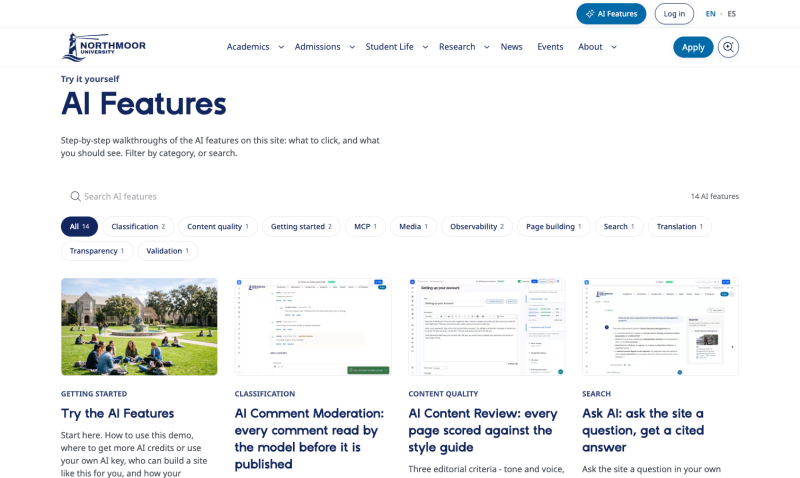
One of the more memorable sessions featured a fictional university ‘Northmoore University’, set up to showcase all these tools in action. You can explore this demo for yourself here. Seeing it all working together on a realistic higher education site made it easy to picture how these features would land with the universities we work with.
A friendlier Drupal
The third theme was usability. Drupal has long had a reputation as a powerful platform that asks a lot of the people using it, and much of the community's effort is now going into changing that. Drupal CMS now brings site templates, Recipes, Drupal AI and the Canvas page builder together, so far more works out of the box.
Multilingual sites are a good example. Canvas now supports them, and setting up any multilingual Drupal site has become easier, which will make a real difference to universities and cultural organisations with international audiences.
Canvas is most exciting for independent site-builders seeking an open source alternative to closed-source visual page-builders, however the architectural work underpinning Canvas are the same foundations that allow us to deliver features with speed and the benefit of stability.
What we got out of it
Talks and keynotes are only half of DrupalCon. The other half is the community, and that's where we got the most from the week.
Drupal is built and maintained by people, and DrupalCon is a rare chance to spend time with the maintainers of modules we use every day. The practical, hands-on sessions gave us the chance to ask questions and get stuck in. It felt like doing open source properly. There's something empowering about working on the code alongside the people who wrote it.
Jacob volunteered as a mentor, helping newcomers make their first contributions to Drupal. That helps the community grow, and it also gave him hands-on experience of mentoring and training that he's now bringing back to our own team.
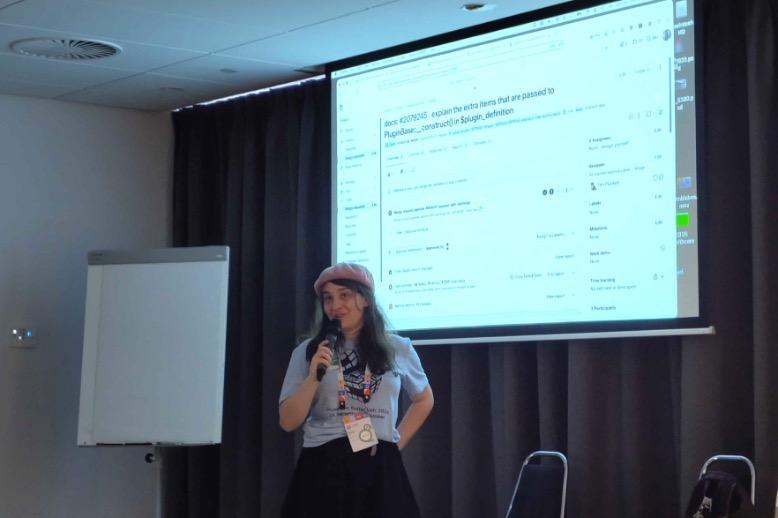
Aurora helped close a Drupal Core documentation issue that had been open for 13 years. Her fix became part of the live commit demo, a session in which one of Drupal's small group of Core committers shows newcomers exactly how code makes its way into Drupal and how contributors are credited. Aurora then went up on stage to talk through her part in it.
Being part of this community isn't just about the warm, fuzzy feeling of chipping in. Developers who take part in the community know the platform more deeply, know the people behind it, and have a wider range of solutions to draw on when a project throws up a tricky problem.
Drupal, but make it pinball
Our standout session of the week was something a bit different. It shared how the open source pinball community uses Drupal to run old pinball machines, with content types for paddles, bouncers and flippers. Drupal was powering a machine built in the 1980s, and we got to play it!
It was a brilliant reminder of how versatile Drupal is, and how it can power experiences well beyond the standard website. If it can run a pinball table, then a museum collection, a course catalogue or a policy library is well within reach.
