

Managing Director
As a founding partner and Managing Director, David has spent 25 years growing Numiko from a graduate start-up into a multi-award-winning agency.
How to get your content found by AI search engines
How to get your content found by AI search engines

Written by David Eccles, Managing Director
AI —
Jump to contentAs search traffic shifts to AI 'answer engines', you need your content to be surfaced by these systems so you can reach your audiences.
Your audiences aren't just searching anymore – they're increasingly using AI products like ChatGPT to answer their questions.
This shift in behaviour changes everything about how people are now discovering your organisation and consuming your content. It will also change how you measure success. It's no longer just about attracting people to visit your website, but ensuring that your content is getting cited, quoted, and trusted by AI so that the people using these tools find and consume your information within those tools directly, or are referred to your website via citation links that these tools provide.
This isn’t about to happen; it’s happening now. Across the many websites we manage for our clients, Google Analytics shows that people use these tools hundreds of times per day to research everything from university courses to complex policy positions. Thanks to Google's Audio Overview, you can even listen to this blog post in the style of an overly cheery podcast.
We work with charities, universities, museums and galleries, and public policy institutions. Each faces the same challenge - being discovered when it matters most.
For museums and galleries, it's about people finding their collections and exhibitions in ways that weren't possible before. For universities, it's prospective students researching where to study. Many of our clients influence society in profound ways; The Joseph Rowntree Foundation works to eradicate poverty, and The Children's Society drives social changes that improve children's lives. What is important for these organisations is that their research shapes government decisions and public understanding, no matter where the audience finds it.
But here's the question that should keep you awake at night: when someone asks ChatGPT about childhood poverty, sustainable energy, or what exhibitions are on in London this weekend, will your organisation be part of the answer?
Recent data shows that 70% of Google searches now result in zero clicks. People get their answers directly from Google's AI summary without visiting any website.
This isn't just about search engines to find websites anymore. Professionals increasingly turn to AI tools for deep research, policy analysis, and complex decision-making. If your expertise isn't feeding these systems, you're missing out on being included in the conversations that will shape the future.
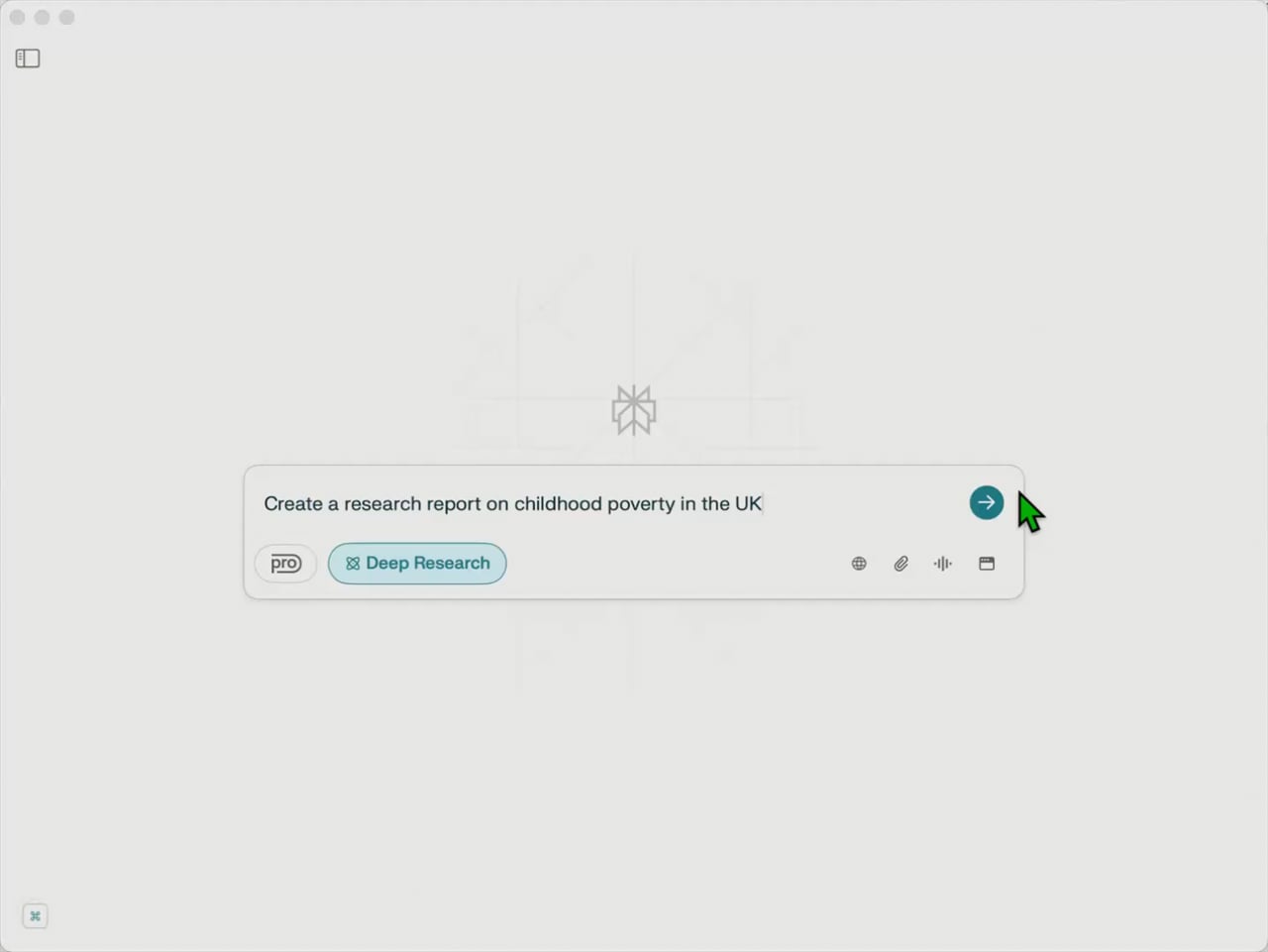
We get it. The idea of AI picking up your content and reshaping it can feel like you're losing control. But step back for a moment and think about how things worked before the internet.
Newspapers and the trade press were people's main source of information. You'd craft a press release with all the key details a journalist might need. But the final article? That was always written in the publisher's voice, for their audience. You didn't expect to control the exact wording. As long as they got the facts right, that was the deal.
AI platforms work much the same way. They take your information and present it in a way that makes sense for whoever's asking the question. Your job is to ensure they can easily find accurate, up-to-date information on your website. Think of it as writing the perfect press release - one that any AI can understand and use properly. The clearer and more comprehensive your content is, the better chance you have of being the source that gets cited when someone asks about your area of expertise.
To help you navigate this new landscape, we've created a guide on ensuring your content is discovered and remains valuable.
AI search engines work differently from traditional search. They're not just looking for keywords – they're trying to understand context, authority, and usefulness. There are several techniques, often referred to as GEO (Generative Engine Optimisation) that ensure you can make your content easy to find, parse and understand the context.
Generative Engine Optimisation (GEO) is a new field focused on helping content creators improve the visibility of their content within the responses of Generative Engines (GEs) like Google's SGE and Perplexity.ai. Unlike traditional Search Engine Optimisation (SEO), which aims to achieve a high rank in a list of websites, GEO aims to have the content integrated and cited directly within the AI-generated summary. This is crucial because GEs synthesise information from multiple websites, which can reduce direct traffic to individual sites.
Optimising for AI isn't about gaming an algorithm. It's about doubling down on quality, clarity, and authority. Here's how to make sure your content has a better chance of being included:
1. Write for the questions people actually ask
Stop thinking about topics and start thinking about questions. Instead of a page called "Our research methodology", try "How we conduct our poverty research" or "Why our data is reliable".
What would someone type into ChatGPT about your work? What would they ask Google's AI? Your content should answer these questions directly and clearly.
Structure your content to answer questions directly. Use clear, concise headings that mirror your audience's questions. Think "How do I...", "What's the best way to...", and "What's the difference between...".
2. Show why you should be trusted
AI tools are getting better at spotting authoritative sources. Google's E-E-A-T guidelines (Experience, Expertise, Authoritativeness, and Trustworthiness) are more important than ever. AI models are being trained to identify and prioritise information from trusted sources.
This means you need to be crystal clear about your expertise by:
Your "About" pages, staff profiles, and research credentials matter more than ever. They help AI understand why your organisation should be trusted over others.
3. Keep everything current
AI companies scrape websites to build their knowledge of your organisation. Any outdated content can 'pollute' the model, meaning it might answer based on old information that's still accessible on your website.
This is particularly critical for:
Having powerful content governance tools built into your content management system will help your team spot and update expired information before it causes problems.
4. Structure for machines, write for humans
When we build websites for our partners, our Drupal specialists use technical markups like LLM.txt and Schema.org. While this has been useful in the past, it'sis now critical in helping AI understand what your content is about.
This is especially important for:
This technical signposting makes it far easier for AI to parse and use your information accurately.
5. Be the definitive source
Rather than writing superficially about many topics, create comprehensive, in-depth resources on a core set of subjects. These models are designed to answer questions in the best possible way, so to be featured, you need to go deeper than your competition.
AI is designed to synthesise information, and it will favour the most thorough and well-explained source material.
6. Clarity is everything
Use simple language. Break down complex topics into digestible chunks with clear headings, bullet points, and numbered lists. An AI can't cite what it can't clearly understand.
Short, declarative sentences work best. This is helpful for humans too.
Strong internal and external linking is a powerful signal of authority. Link out to other trusted, authoritative sources to support your points, and work on building high-quality backlinks to your content. This shows AI that your content is a respected part of a larger ecosystem of knowledge.
If Cloudflare protects your website, it’s important to note that as of the 1st of July 2025, it will be blocking AI bots from scraping your content by default. So, should you allow these AI tools to ingest your content?
We ran a webinar on this in June, and you can access the recording here, and our write-up to dig into whether blocking is the right choice for your organisation.
Traditional metrics like website traffic and click-through rates will now only tell part of the story. You also need to monitor:
We have invested in tools to help track and report these new metrics alongside traditional SEO reporting for our clients.
The most important step is understanding how AI currently presents your organisation. Try searching for topics in your expertise area using different AI tools. Are you mentioned? Is the information accurate? Are you positioned as an authority?
This new landscape requires ongoing attention, not a one-time fix. But organisations that embrace it now will build significant advantages in how they're discovered, understood, and trusted by their audiences.
The conversation about your organisation is happening with or without you. The question is whether you're part of it.
Managing Director
As a founding partner and Managing Director, David has spent 25 years growing Numiko from a graduate start-up into a multi-award-winning agency.